

"Cruel Optimism"
AKA "Toxic Ignorance"
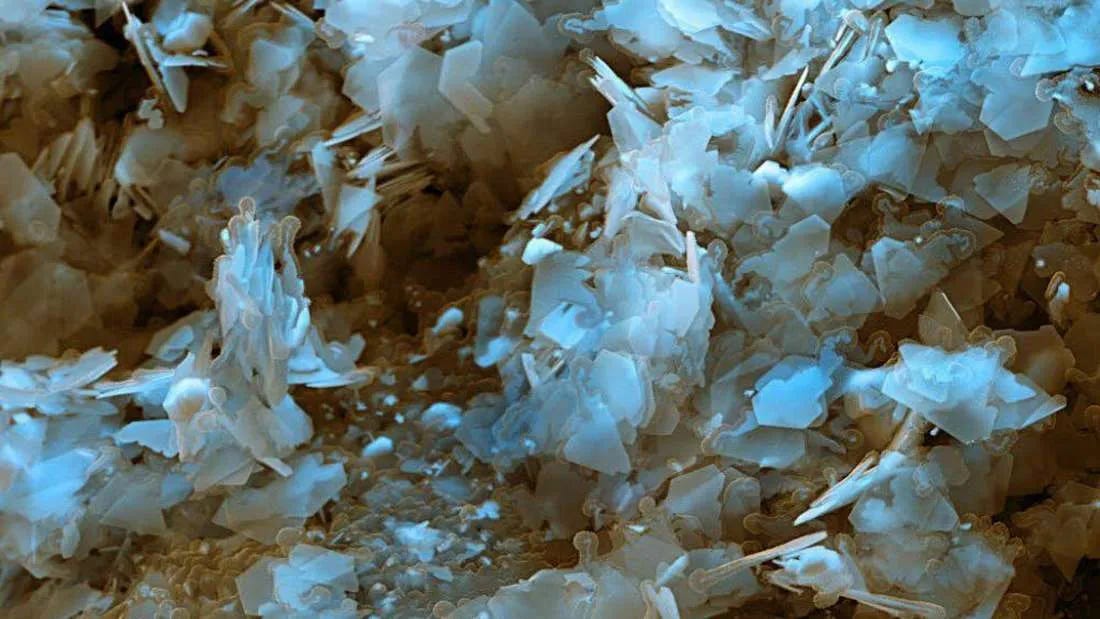
Editor-in-chief of Social Studies of Science, Sergio Sismondo recently ran a remarkable article which examines the dangers of plastics not just as biological toxins, but as a systemic issue involving institutional ignorance and the politics of knowledge.
The authors of this particular sociological perspective delineate three overarching forms of promissory technologies related to plastics and the temporalities associated with them: 1) technologies of patience, 2) technologies of deflection, and 3) technologies of salvation. They argue that these technologies enable unabated attachments to plastics even as the harms of these attachments become ever-more abundant and evident.
Each suggests a continuity with a future that has resisted large-scale political economic changes, excepting improvements in technology itself. In the first…
Technologies of Patience’…
…… The well-trained and conditioned subject, who has already been virtuously separating waste and consuming the ‘right kinds’ of goods, is promised a future that will usher in improved infrastructures that eternally recycle and renew, without the need for radical changes in consumption or lifestyle patterns. In the second ‘technologies of deflection’, the future is made possible by a present which has already solved all crises. This miraculous present can occur in places unseen, such as definitive ocean clean-ups or product possibilities closer to home, such as bioplastics, or plastic-eating microbes to clean up the waste -
While acknowledging the need for new structures for managing plastic production, consumption, and disposal, they also encompass a techno-optimism that suggests that the problem can be solved through innovation and human ingenuity rather than by radical shifts in lifestyle and aspiration. Technologies of patience advocate a future-oriented perspective that embraces delayed gratification.
Technologies of Deflection
If technologies of patience ask for fortitude in the present premised upon a better future, what we term ‘technologies of deflection’ suggest that the present moment is already a sustainable one. Unlike technologies of patience, technologies of deflection do not acknowledge the need for large-scale changes. Affectively, these technologies function as a form of gaslighting, minimizing the scale of the problem and encouraging a denial crucial to the continuation of the status quo. They embed the claim that the conditions for a sustainable future already exist in the present and that their enactment only requires self-policing and responsibility from individuals and compliance from populations.
Technologies of Salvation’
This view signals a future made possible by imagined planetary processes that ameliorate humanity’s incapacity to provide a technological fix. Human agency need not be present at all, unless it is imagined as shepherding the ingenuity present within the planet’s self-adaptive resilience to withstand and transform anything that polluters can create, this despite mounting and ever-more alarming scientific findings that clearly suggest the contrary. the temporality implied is of a future which corrects humanity’s waywardness/degeneration through the self-caring capacities of planet Earth.
It’s an interesting perspective, and makes sense.
After all, we don’t/can’t really absorb the fact that we’re all, all 8.2 billion of us, already swarming with these toxins; nor that we - not even the 1% - can NOT evade them, . There’s no escape, no ‘fix’, no actual ‘salvation’ ahead. The industry’s "promissory technologies"—like advanced recycling—actually hinder systemic change by keeping society attached to plastic despite its evident harms.
Our reality now...
... is that while anyone under the age of 70 has unknowingly, unwillingly been accumulating this stuff in their bodies throughout their lives, the under-40s are experiencing a surge of “old people’s diseases” and reduction of “life health expectancy” , but it’s the under 20s who are most likely to feel the full range of impacts and have the highest life expectancy curtailed. Now, as Dr. Tracey Woodruff of UCSF has just reported, 2 year-olds have higher levels of these chemicals than their 3 or 4 year old siblings. And now transgenerational toxicity has been confirmed; nanoplastics can penetrate the reproductive system and trigger damage that is passed down through generations, even if the offspring are never directly exposed to the plastic themselves.
There must be research to prove causality and hence risk. There is no other option but a multi-discipline, multi-national longitudinal epidemiological research effort, from birth at least through adolescence, if not to adulthood. The health impacts of NPs on children must be the main focus, the only one powerful enough to generate a unified, effective research response.
But that’s not going to be allowed because this really is a systemic issue involving institutional ignorance and the politics of knowledge..
Thanks to the MAHA’s now-law “Gold Standard Science” the US government has made such social, regulatory and legal issues moot.
Instead of ‘salvation’ the paper suggests bearing witness to the fact that these patterns and strategies render other futures impossible, as those would expose the victimized to uncomfortable psychological responses and leave necessary social and political action as the only option.
Often presented as ‘good news’ media stories, technologies of salvation provide a misplaced sense of hope that the Earth can not only cleanse the planet of plastics and other anthropogenic toxicants, but also provide solutions for broader concatenating anthropogenic environmental crises.
False optimism is cruel and just not true.
It is no wonder that people are suffering from disease and cancers that were unheard of before ! 🤷♀️🤐🤬😡🤢😷🤮🤒🤦♀️